

"Choosing the correct gear for a corner can quickly lead to faster lap times and is a simple skill once learnt."
Most sim racing beginners will start their driving career with automatic gearing. This is great and gives you the ability to concentrate on all the other high paced action happening around you. However, it isn't the optimal way of driving and time will be lost on track if you allow the computer AI to decide when is best for you to shift. If you look at the pure physics of when to shift up a gear, it can be defined as the point when you achieve better acceleration in a higher gear. If your cars RPM is very close to the peak torque of the wheel then it is time to change gears up to achieve maximum acceleration.
The computer AI will shift up (or down) depending on very simple rules around maximum and minimum RPM in a certain gear. There are reasons why this might not be an optimal choice on track. Take control of your gear shifting. Looks at the RPM lights on your HUD, listen to the engine noises and soon your gear choice will be your choice.
One common mistake is to drop your car into too low a gear. Easy to check on the telemetry analysis, and just remembering the gear choices of the reference lap can immediately bring you faster lap times. One great technique is to jot down all the segment numbers and write down (or remember) the lowest gear that was used on that segment. When practicing, try to mimic those gear choices.
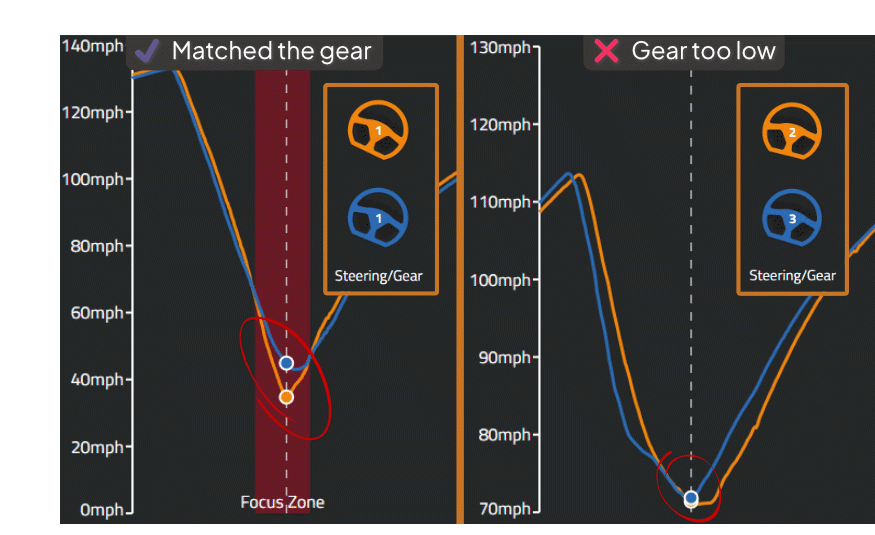
A simple telemetry view for this week. On each segment look for the slowest section of the racing line. Generally this would be around the apex of the corner and then check to see the gear that you and the reference lap have chosen. In most situations you'll find that if you've dropped your gear too low then you'll be suffering with slower lap times.
As an exercise, either written down or remember all the segments then check which gear the reference lap was using. Replicate this on track next time you are practicing your 'Find the Gear' task.
©Track Titan 2026. All rights reserved


